How to Measure Bra Size: Your Guide to the Perfect Fit
Because Chances Are, You’re Wearing the Wrong Size—But Measuring Yourself at Home Is Easier Than You Think
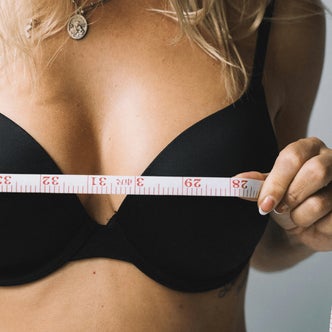
Photo by Anna Tarazevich via Pexels
Research suggests somewhere between 70% and 85% of women are wearing the wrong bra size. If that number seems high, consider this: it's not your fault. The bra industry has no universal sizing standards, so a 34C at one store won't fit the same as a 34C somewhere else. Add in outdated measurement methods still circulating online (like the old "+4 inches" rule), plus the fact that our bodies are constantly changing—weight, pregnancy, even monthly cycles—and it's actually surprising any of us get it right.
We're here to demystify the whole process. Learning how to measure your bra size at home takes about five minutes and requires nothing more than a measuring tape. We'll walk you through the two simple measurements you need, how to calculate your size, sister sizing (your secret weapon when your exact size is sold out), and the game-changing “scoop and swoop” technique that most women don't know about but absolutely should.
Once you know your actual size, everything gets easier—from shopping different bra brands to daily comfort. Professional bra fittings exist and can be helpful, but you can absolutely figure this out yourself. The most common mistake? Wearing a band that's too big paired with cups that are too small. If that sounds familiar, keep reading.
Why Your Bra Size Actually Matters
Wearing the right bra size affects way more than just comfort—it impacts your physical health, how you feel about yourself, and how your clothes fit. Understanding why proper fit matters makes the measuring process feel less like a chore and more like self-care.
The Physical Impact
This goes way beyond "uncomfortable bras are annoying." The physical stakes are real: back pain, shoulder pain, pressure headaches, poor posture, skin irritation, and even breast pain. The National Breast Cancer Foundation notes that when your cup is too small, it can cause actual breast pain, and when your band is too big, your straps end up bearing all the weight and digging into your shoulders, which triggers those end-of-day headaches we've all experienced.
An ill-fitting bra also affects how your clothes drape and your posture, which matters for long-term physical health. When your bra isn't doing its job, your whole body compensates in ways you don't even notice until the discomfort becomes chronic.
How It Affects Your Confidence
The emotional impact is just as important, though most guides skip right over it. There's the confidence that comes from clothes fitting the way they should. Then there’s the difference between feeling put-together versus constantly tugging at your bra all day, adding the mental load of low-grade discomfort you're carrying around without even realizing it. A well-fitting bra is like finally finding jeans that actually fit your body—when it's right, everything else falls into place and you stop thinking about it.
Your Body Changes (And That's Normal)
Weight fluctuates. Hormones shift throughout your monthly cycle, during pregnancy, with birth control, through menopause. Even aging changes breast tissue composition. Sizing also varies wildly across brands due to lack of standardization in the industry—you might genuinely be a 34C at one store and 36B at another, and both can be "right" for those specific brands.
We've all been there, constantly pulling at straps or dealing with underwire that feels like it's staging an escape attempt. Even if you thought you knew your size years ago, it's worth taking time to measure your bra size again. This is self-care, not a chore.
What You'll Need to Measure Your Bra Size
No fancy equipment needed for measuring bra size—just grab a soft measuring tape (the fabric kind, not a metal one) and a mirror so you can check that the tape stays level all the way around your body.
What to wear during measuring: You'll get the most accurate results in a thin, non-padded bra or going braless. Definitely skip push-up bras, minimizers, or sports bras—they compress or enhance your natural shape and will throw off your measurements.
Timing matters more than you'd think. Measure mid-cycle, not during your period when your breasts may be swollen from hormonal changes.
How to stand: Keep it natural. Stand with your shoulders relaxed (not pulled back or hunched forward), arms at your sides, breathing normally. Don't hold your breath or suck in your stomach—we want accurate numbers, not aspirational ones.
That's the prep work. Five minutes of your time, and you're ready to get your actual measurements.
All products and deals are sourced by the Rank & Style team using data and expert insights. If you shop through our links, we may earn a commission—at no extra cost to you.
Authors

Beth is a 14+ year merchandising industry veteran and a mom of one. Prior to Rank & Style, she served as VP for omni- channel software solution and e-commerce startups. Beth graduated from Purdue University and FIT. She’s passionate about female lead

Written By:
Beth Zerdecki


How to Measure for a Bra: The Two Key Measurements
.png?width=300&quality=65)
rank & style
Getting your bra size right comes down to two simple measurements: your band size (around your ribcage) and your bust size (around the fullest part of your chest). The difference between these two numbers tells you your cup size.
Measuring Your Band Size (Underbust)
This is measurement number one.
- Wrap the measuring tape snugly around your ribcage, directly underneath your breasts—right where the band of your bra normally sits. The key word here is snugly. The tape should be tight enough to stay in place but not so tight you can't breathe. You should be able to slip two fingers under it comfortably.
- The most critical detail that trips people up: The tape MUST be parallel to the floor all the way around your body. Use your mirror to check from every angle you can see. Look at yourself from the front, turn to the side, and if possible check the back view. The tape shouldn't be twisted or angled at all.
- Once you have your measurement in inches, round to the nearest even number. Bra bands only come in even numbers (32, 34, 36, and so on). If you measure an odd number like 33 inches, you'll try both 32 and 34 to see which feels better—more on that when we talk about sister sizing in a minute.
Take your time with this measurement and double-check it in the mirror—getting the band right is half the battle.
Measuring Your Bust Size (Overbust)
Now for measurement number two, which is how to measure your bust.
- Measure around the fullest part of your bust. This is usually right at nipple level, though it varies depending on your breast shape. Unlike the band measurement, this one should be loose. You're measuring over your breast tissue without compressing it at all.
- Keep your arms at your sides (don't raise them). Stand up straight with your shoulders relaxed, just like you did for the band measurement.
- The tape still needs to be parallel to the floor—grab your mirror and check again.
- The tape should rest gently against your skin and breasts without pulling tight or leaving any kind of indentation.
- Record this number in inches. You'll use it in the next step to calculate your cup size.
Common mistake to watch out for: Don't pull the tape tight or compress your breasts downward. You want to measure your natural breast volume, not squish it down to a smaller number. The tape should feel like it's just resting there. Think of it like measuring your waist for jeans—you want accurate numbers, not aspirational ones.
Calculating Your Cup Size
Here's where a little simple math comes in. Take your bust measurement and subtract your band measurement. The difference tells you your cup size, with each inch corresponding to one cup letter.
The formula works like this:
- 1 inch difference = A cup
- 2 inches = B cup
- 3 inches = C cup
- 4 inches = D cup
- 5 inches = DD or E cup (depending on brand)
- 6 inches = DDD or F cup
Let's try a concrete example to make this clearer. Say your band measurement is 34 inches and your bust measurement is 37 inches. Subtract: 37 minus 34 equals 3 inches difference. Three inches equals a C cup. So your bra size is 34C.
One more thing to keep in mind: If you measured an odd number for your band, you'll end up with two possible starting sizes because of sister sizing (which we're about to explain). For instance, if you measured a 33-inch band and 37-inch bust, that's a 4-inch difference. You'd try both 32D and 34C since both are valid sister sizes for your measurements.
Don't stress if the numbers surprise you or you end up between sizes. We'll show you how to fine-tune the fit and work with sister sizes to find what actually feels right on your body.
The Scoop and Swoop: The Fitting Technique That Changes Everything
Most women don't know about this secret technique, and once you learn it, you'll never put on a bra the same way again. It's also called "scoop and grab" or "swoop and scoop"—different names for the same game-changing method.
What it actually is: A technique to ensure all your breast tissue (including the tissue that extends around your ribcage toward your armpits) is inside your bra cups where it belongs. Most women don't realize breast tissue extends that far to the sides, so they're walking around with tissue sitting outside the cups, which throws off the entire fit.
The step-by-step process:
- Put on your bra and hook it at the back like you normally would.
- Bend forward at the waist—this helps your breast tissue fall forward naturally.
- Using your opposite hand, reach into one cup from the side.
- Scoop all the breast tissue from your underarm and armpit area forward into the cup. You're literally gathering tissue from the side of your ribcage and pulling it toward the front of the cup.
- Repeat on the other side, using your other hand.
- Stand up straight and check the fit.
Why is this technique is such a game-changer? It reveals whether your cup size is correct. Many women discover after doing the scoop and swoop for the first time that their cups are suddenly too small—breast tissue is now spilling over the top because it's all where it should be, instead of hiding out under their arms. This is good information! It means you need to size up in the cup.
It also ensures your underwire is sitting behind your breast tissue instead of on top of it. This is often why underwire feels painful for so many women—it's in the wrong position, sitting on tissue instead of behind it.
This should become part of your routine every single time you put on a bra, regardless of your breast size. Once you get the hang of it, the whole process takes about two seconds and makes a huge difference in both support and comfort.
Sister Sizing Explained: Your Secret Weapon for Finding the Right Fit
Sister sizing is one of those ideas that sounds confusing at first but becomes incredibly useful once you understand it. Many women have heard the term without actually knowing what it means.
The concept: Sister sizes are bra sizes that have the same cup volume but different band sizes. Here's the insight that blows most people's minds: Cup size is not universal across all band sizes. A "C cup" on a 34 band holds a different volume than a "C cup" on a 36 band. Cup size is always relative to the band it's paired with. The letter only makes sense when you know what band it's attached to.
The simple rule to remember: When you go down one band size, you go up one cup size to maintain the same cup volume. When you go up one band size, you go down one cup size. It's like a sliding scale that keeps the cup volume consistent even as the band changes.
Actual numbers make this way easier to understand:
- 34C = 36B = 32D (all same cup volume, different bands)
- 38DD = 40D = 36E (all same cup volume)
- If you normally wear 32B but the band feels tight, try 34A (same cup volume, looser band)
- If you wear 36C but the band feels loose and rides up, try 34D (same cup volume, tighter band)
So When Would You Use Sister Sizing in Real Life?
Here are the practical scenarios where it's genuinely helpful:
- Your exact size is sold out at the store or online. Instead of leaving empty-handed, grab a sister size. If you need a 34C and they're out, try the 36B or 32D instead.
- The band feels too tight or too loose but the cups fit perfectly. This is the classic sister sizing situation. Adjust the band while keeping the same cup volume.
- You're trying different brands. Sizing varies between manufacturers, so your "true size" in one brand might need a sister size adjustment in another brand.
- Your body is fluctuating. Whether it's weight changes, hormones, your monthly cycle, or just bloating on a particular day, sister sizes give you flexibility.
Keep in mind, sister sizing works best when you only go one band size up or down. If you jump two or more band sizes away (like going from 34C to 38A), the proportions start to feel off and the strap placement gets weird.
Once you understand this concept, you suddenly have way more options when you're shopping. Let's say you're usually a 34C but that size is sold out—just grab a 36B instead. Same cup volume, and you might even prefer how it fits.
How to Tell If Your Bra Actually Fits
Grab a mirror and check these things in whatever bra you're wearing right now.
The band: Should be parallel to the floor when you look at your profile in a mirror—not riding up in back, which is the number-one sign it's too loose. When you turn to the side, the band should form a straight horizontal line all the way around your body. You should be able to fit two fingers snugly under the band, but no more. If you can fit your whole hand under it, the band is too big.
The center gore (the part between the cups): Should lie completely flat against your chest. If it's floating away from your body or pulling away, your cups are too small.
The cups: Should fully contain your breasts with no spillage over the top or sides. That "quad-boob" effect means cups are too small. On the flip side, no gaping or wrinkling—that means cups are too big. After doing the scoop and swoop, your breasts should fill the cups completely.
The underwire: Should encircle your entire breast, lying flat against your ribcage. Check from the side—the wire should follow the natural curve of your breast and head toward the back of your armpit, not sit on top of breast tissue. If it's poking you, it's in the wrong place.
The straps: Should stay in place without falling down, but they shouldn't dig into your shoulders leaving red marks or grooves. Remember, they're just there to keep the cups in place—the band does the heavy lifting.
If even one of these is off, don't worry. We'll troubleshoot it right now.
Common Bra Fit Problems and How to Fix Them
If you checked the fit list above and something's off, here's exactly how to fix it. Each problem has a clear cause and solution—these are all fixable with the right size adjustments.
Your Band Rides Up in the Back
When you look in the mirror from the side, the band curves up in back instead of staying horizontal. We see this fit issue more than any other.
The cause: Your band is too big. Since the band provides 80% of your support, when it's loose it can't do its job. Your breast weight pulls the front down, which makes the back ride up like a seesaw.
The fix: Go down a band size and up a cup size (sister sizing in action!). For example, if you're wearing 36C and the band rides up, try 34D.
Spillage or "Quad-Boob"
Your breasts are spilling over the top or sides of the cups, creating that four-boob effect. This is especially noticeable after doing the scoop and swoop.
The cause: Your cup is too small for your breast volume.
The fix: Go up one or more cup sizes while keeping the same band. If you're in 34C with spillage, try 34D or 34DD.
Gaping or Wrinkling in the Cups
There's empty space at the top of the cups or the fabric wrinkles. Your breasts aren't filling out the cups completely.
The cause: Either the cup is too big, or the bra style isn't right for your breast shape. Some breast shapes (fuller on bottom than top) naturally have space at the top of full-coverage cups.
The fix: Try going down a cup size first. If that doesn't work, try a different bra style—balconette or demi-cup bras work better for breasts that are fuller at the bottom.
Underwire Digging In or Poking
The underwire feels uncomfortable, pokes you in the ribs or armpits, or digs into breast tissue.
The cause: Usually the underwire is sitting on your breast tissue instead of behind it. This often happens if you're not doing the scoop and swoop, or if your cup size is too small.
The fix: First, try the scoop and swoop technique to pull all tissue into the cups so the wire sits behind it. If it still digs after that, you may need to go up a cup size or try a different wire shape.
Straps Keep Falling Down
Your straps slip off your shoulders constantly, even when you tighten them.
The cause: Could be several things—straps might be too far apart for your frame, the band might be too loose, or the bra style isn't right for your shoulders.
The fix: First check if your band is riding up (if yes, size down in the band). If the band fits but straps still fall, try a bra with straps that are closer together, like a racerback or cross-back style.
Straps Digging Into Your Shoulders
The straps are leaving grooves or red marks on your shoulders, and you're in pain by end of day.
The cause: The band is too loose, so your straps are bearing too much weight. The straps should only provide 20% of the support, if your band isn’t doing it’s job properly then it falls to the straps.
The fix: Go down a band size and up a cup size for the same volume. A properly fitting band takes the weight off your shoulders. Also look for bras with wider, padded straps for extra comfort if you have a larger bust.
How Often Should You Measure Your Bra Size?
The general guideline: every 6 to 12 months as a baseline. This ties directly to bra lifespan—bras typically last 6 to 9 months with regular wear, so when you're replacing your bras is a natural time to remeasure. Some women prefer getting a professional bra fitting annually, while others measure at home between purchases.
Remeasure your bra size right away after:
- Pregnancy, during breastfeeding, or postpartum. Breast size can change dramatically and even fluctuate day to day.
- Weight changes of 10 to 20+ pounds. Even smaller fluctuations can affect cup size since breast tissue is partly fatty tissue.
- Starting or stopping hormonal birth control, since hormones affect breast tissue.
- Entering perimenopause or menopause, since hormonal changes can affect breast size and shape.
- Any major surgery, especially abdominal or chest surgery.
- Starting a new intensive fitness routine or training program, as it can affect body composition.
Signs you need to remeasure even without life changes:
- You're constantly adjusting your bra throughout the day (pulling at straps, tugging band down)
- Red marks or indentations on your skin that linger after taking your bra off
- New back, shoulder, or neck pain
- Straps are falling off your shoulders or digging in deeply
- Spillage over the cups or gaping in the cups
- Underwire feels uncomfortable or is in the wrong position
Our breasts respond to hormonal shifts (even monthly cycles), weight fluctuations, and aging—they're not static. Remeasuring is a normal part of staying in tune with your body.
Pro Tips for Getting the Most Accurate Bra Size
Beyond the basic measurements, there are insider tips that can help you get the most accurate size and avoid common mistakes.
Debunking the "+4 Inches" Myth
Some outdated guides floating around online tell you to add 4 or 5 inches to your underbust measurement to get your band size. This is old advice from when bra bands weren't stretchy. Modern bras have elastic, so adding inches gives you a band that's way too loose. Use your actual measurement rounded to the nearest even number. Don't add anything.
What to Do About Asymmetrical Breasts
Most women have asymmetrical breasts (one is larger than the other)—it's completely normal.
The pro tip: always fit the larger breast. Choose your cup size based on whichever breast is bigger. If needed, you can use padding inserts or removable pads to balance out the smaller side. Never choose a size based on the smaller breast because you'll end up with spillage on the other side.
Best Time to Measure for Accuracy
Measure mid-cycle, not during your period when breasts may be swollen from hormones. Some experts even recommend measuring at the same time of day for most consistent results. Morning is often best before any daily bloating sets in.
How to Properly Wear Your New Bras
When you buy a new bra, it should fit on the loosest hook. This seems counterintuitive, but the logic is sound: as your bra stretches with wear and washing, you can move to the middle and then tightest hooks to extend its lifespan. If a new bra only fits on the tightest hook, it's already too big and will get worse over time.
Understanding That Brands Vary
There's no universal standard for bra sizing—a 34C at one brand won't fit exactly like a 34C at another. This is genuinely frustrating but it's the reality. Your measurements and understanding of sister sizes give you a starting point, but always try on multiple sizes when you're trying a new brand.
Where to Get a Professional Bra Fitting for Free
While you can absolutely measure yourself at home (and now you know how!), sometimes it helps to get a second opinion from a professional bra fitting expert, especially if you're between sizes or trying a new brand. A professional bra fitting can also help you find styles that work for your specific breast shape, which is valuable beyond just getting measurements.
Where to go for free fittings:
- Victoria's Secret: Offers free bra fittings at most locations. Their fit experts can measure you and recommend styles from their range. Book an appointment or walk in.
- Nordstrom: Known for excellent bra fitting services, especially for extended sizes. Their fitters are well-trained and can special order sizes if needed. You can walk in, but it doesn't hurt to book ahead of time.
- Specialty lingerie boutiques: Look for independent lingerie stores in your area—many offer complimentary fittings and carry a wider range of sizes and brands than department stores. The personalized attention can be worth it.
- Department stores: Many have lingerie departments with fitting services, though quality of fitting can vary by location.
Ready for a visit? Here’s what to expect: A fitter will measure you (usually over a thin bra or camisole), ask about any fit issues you're having, and bring you sizes to try. They'll check the fit and adjust as needed. It typically takes 15 to 20 minutes.
Even if you get professionally fitted, it's still smart to know how to measure yourself at home so you can check your size between fittings and shop online with confidence.
Finding Your Perfect Bra Size Starts Right Now
We've covered the measurements, the math, sister sizing, the scoop and swoop, and how to troubleshoot fit issues. You now know how to measure for a bra from start to finish. But this isn't just about numbers and calculations—it's about how you feel.
A properly fitting bra changes more than just your comfort level. Clothes fit better and drape the way they should. Your posture improves. You stop thinking about your bra all day because it's working with your body instead of against it. There's real confidence that comes from feeling supported, literally and figuratively.
Grab a measuring tape right now (it takes five minutes!). Try the scoop and swoop technique with bras you already own and see if it changes the fit. Check those visual fit cues in the mirror. You deserve a bra that actually works for your body and now you know exactly how to find it.
Ready to start upgrading your top drawer? Check out our list of best wireless bras and our guides to the best bra brands and top lingerie brands for bra shopping inspo.
Authors
Beth is a 14+ year merchandising industry veteran and a mom of one. Prior to Rank & Style, she served as VP for omni- channel software solution and e-commerce startups. Beth graduated from Purdue University and FIT. She’s passionate about female lead


.png?width=172)





.png)