The Ultimate, Low-Maintenance Haircare Routine
Hair Needs Some TLC, but Don’t Have the Time to Luxuriate in a Long Beauty Ritual? Our Favorite Experts Weigh In on the Ultimate, No-Fuss Hair Regimen To Make Your Locks Healthier Than Ever.
-
As a ’90s baby, I’ve been known to put haircare myths to the test. I’ve finished my showers in ice-cold water to “seal in the cuticle,” greased my thin locks in heavy coconut oil, and even rinsed my hair with bottles of apple cider vinegar. Though I never partook in the mayonnaise mask craze, I’ll try just about anything to get my hair looking right. When it comes to hair, women will go to extreme lengths for that luscious look and feel. Hair is deeply tied to identity—thank you, toxic masculinity—and integral to how we see ourselves. In other words, we do our best to care for it. So, when it comes to finding the perfect haircare routine, there isn’t much we won’t try. Below, we tapped some of our favorite experts to help put together the ultimate hair regimen. It may surprise you.
Shampoo Counts
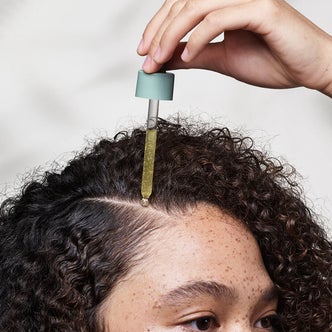
Don’t overlook the shampoo process. Jordan Luger, stylist at Bassia Bassia—and the woman behind the best haircut of my life—stands ten toes down when she says the scalp is the most important part of a hair treatment routine, as cleansing properly is crucial for removing buildup.
Amy Forik of Salon Botanique, whose locks are somehow always silky smooth, adds, “I feel strongly that scalp health is so important and often overlooked in a routine. We are all typically worried about the ends of our hair and what the overall look is.” Amy goes on, “Things like environmental factors (air pollution and hard water) and daily product use (think dry shampoo and serums) causes buildup, which can lead to brittle hair, breakage, and lasting damage. Keeping up with weekly scalp scrubs or detox shampoos can really help maintain a healthy scalp and in turn, healthier hair overall.”
Need more convincing? Acclaimed NYC dermatologist, Dr. Doris Day, details the importance of doubling up on the suds on her Instagram page. She analogizes it to double cleansing the face: the first wash removes makeup and sunscreen, the second rinse does the rest. Both rounds have different intentions, but both are equally important.
Dr. Day says that even three rounds of shampoo could sometimes be beneficial, and provides a trick to know if you’ve thoroughly shampooed your hair: “If the first time you shampoo, you don’t get much of a lather, that means you’re really just removing debris, but you’re not cleaning your scalp. The second shampoo should get a much better lather, even with products that don’t lather a lot.”
The result? Fresh, voluminous, bouncy hair that’s not stripped, but squeaky clean.
To Mask, Or Not to Mask?
In the world of haircare, a good conditioner is essential. Conditioning after shampoo is not to be avoided (though not at the root!), but the same isn’t true of hair masks. “I think hair masks are important, but not the end-all, be-all in your routine,” Amy suggests. “It’s usually an easy answer to your problems. And let’s face it—they make your hair feel incredible immediately. But focusing on daily hydration and hair health is more important than your weekly mask.”
So, when is the right time to use a mask? Jordan suggests adding a one every now and then when your hair needs it, particularly in the winter months or in the summer, post-swim. But if your hair is craving even more hydration, go ahead and top it off with a luxe anti-frizz serum. For natural hair, oil sprays will help lock in extra moisture.
Less is More
“I absolutely think over-productization can easily work against you,” Jordan notes. “Overusing hair products can lead to an unhealthy scalp, hair not looking or being clean, irritation, which can slow down hair growth.” In fact, too much product can actually lead to breakage. “You don’t want to put a lot of different products in your hair because it can actually weaken the strand, and each individual strand can start to break off. That’s how breakage and weak hair ends are created.”
“I find that when people focus too much on their hair and what products they should be using, it stresses them out. Focus on balance instead of excess, and that’s when your hair really thrives.”
“Simplifying your product use is important,” Amy adds. “Most clients come in and tell me about four or more products they use to style their hair. This is problematic for a few reasons: overuse can cause that nasty product buildup, they’re overspending, and they’re unknowingly buying products with similar benefits.”
Build Your Own Routine
So, how do you actually put all of this into practice? Jordan suggests starting with a shampoo that cleanses your hair and gets it clean without weighing it down. Follow up with a good conditioner, and you’re set. Really. Less actually is more. If you still want to up the ante later, you can add in the occasional scalp scrub and hair mask in the dryer months.
Another pro tip: “I often see a lot of women ripping through their hair with a brush,” Jordan states. “I think being a little more gentle with brushing goes a long way. And don’t forget to brush often.” Here are some of the best hair brushes for gentle detangling.
One of the biggest takeaways here is that consistent care beats using expensive products. Splurging on top-shelf hair lotions and potions can feel like an investment in self-care, tending to your hair regularly is what really creates long-lasting impact. If you have access to top-of-the-line products you swear by, that’s great, but keeping your scalp clean and your hair conditioned and detangled is more beneficial than using high-quality products in the long run.
A Haircut Is Your Friend
One hair legend that’s not a myth, however, is the power of a haircut. A trim still has much importance in the haircare world. Ever notice that a fresh chop makes your hair look fuller? You’re not imagining things. This is because removing the split ends adds a certain bounce. Overgrown hair can weigh it down, which decreases volume at the crown. Plus, by removing the damaged ends, a new cut will make your hair color look like new. Jordan advises getting your hair trimmed every 3-4 months if you have long hair or every 2-3 months if it’s shorter.
Amy concurs, “Stay consistent with your maintenance haircuts! Split ends will just continue to split if you don’t get them trimmed off every 8-10 weeks.” She warns that without a timely trim, you’ll leave the salon with more length cut off than you planned. And a too-short haircut—as any woman knows—is a true hair nightmare.
All products and deals are sourced by the Rank & Style team using data and expert insights. If you shop through our links, we may earn a commission—at no extra cost to you.
Authors

Katie Attardo is a freelance editor and writer with 10+ years of experience in fashion magazines, who now splits her time between New York and Paris.
Written By:
Katie Attardo


At Rank & Style, we value a wide range of voices. This guest piece was produced with our editorial guidance to share Katie Attardo’s independent perspective on the topic.
Authors
Katie Attardo is a freelance editor and writer with 10+ years of experience in fashion magazines, who now splits her time between New York and Paris.







.png)