Gray Hair Care and Styling, Explained
Your silver strands deserve a routine built just for them. Here's everything you need to know.
oribe
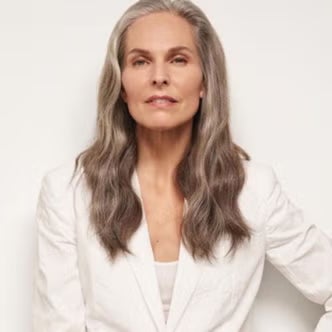
For a long time, the whole vibe around gray hair was basically emergency mode. Hide it. Tone it down. Cover it up just to buy yourself another six weeks. But that energy has totally shifted. Silver streaks, full salt-and-pepper looks, women just letting it do its thing. And honestly? They look incredible. Mostly because they look like they genuinely do not care what anyone thinks.
But deciding to go gray is only half of it. Actually caring for it is where most people hit a wall. Gray hair is kind of a rebel. It doesn't follow the same rules as pigmented hair. Different texture, weird quirks, more sensitive overall. So if your old routine suddenly feels like it stopped working, you're not imagining it. Your hair changed the game on you.
The good news is that once you know what your silver strands actually need, building a routine around that is pretty straightforward. Whether you're just spotting your first few silvers or you're already full platinum, we've got you.
All products and deals are sourced by the Rank & Style team using data and expert insights. If you shop through our links, we may earn a commission—at no extra cost to you.
Authors

Allison Wall is a Senior Deals Editor at Rank & Style who covers fashion, beauty, and lifestyle with a sharp eye for what's actually worth your money. She helps readers shop smarter at the brands they love by laying out every way to save, from welcom
Written By:
Allison Wall


So, What Is Actually Going On With Your Hair?
Before you can really take care of your gray hair, it helps to understand why it suddenly feels like you are dealing with a completely different person on top of your head. Because it’s not just the color that changed, but the entire makeup of the hair strand has shifted as well.
What Actually Happens When Hair Goes Gray
Here is something that surprises most people. Gray hair is not actually gray. According to a review in the International Journal of Trichology, your hair color is determined by melanin, and without that pigment, the hair strand is actually translucent. It only looks silver or white because of the way light hits it and bounces off.
And losing that melanin does more than just change the look. That’s because melanin actually acts like a natural shield against the sun. Research published in the Journal of Photochemistry and Photobiology shows that when melanin is missing, UV rays can get right into the hair and start oxidizing the proteins. This is usually why gray hair can start to look a bit yellow, dull, or feel much coarser than it used to. It’s not just old hair. It’s hair that has lost its built-in sun protection.
Why the Texture and Color Change Too
The changes go way deeper than just basic dryness. A study published in Clinical, Cosmetic and Investigational Dermatology in 2025 found that gray hair usually has a thinner outer layer and higher porosity than hair with pigment.
This basically means that your hair is acting like a sponge. It sucks up moisture the second you hit the shower, but it also loses it just as fast. This creates a really frustrating cycle where your hair feels hydrated for five minutes and then bone-dry an hour later.
Now, since everyone is different, gray hair doesn't have just one "look." You might find your hair getting finer and full of flyaways, or it might be getting coarse and wiry. And if you have natural curls, you might even notice your curl pattern doing its own thing in ways you didn't expect.
Then there is the issue of yellowing. That same 2025 study in Clinical, Cosmetic and Investigational Dermatology points out that the yellowish tint that creeps into silver hair is caused by oxidation. This is basically a mix of sun damage, pollution, and even everyday stress hitting your hair all at once. And since your hair doesn't have the melanin to protect it anymore, it’s much more sensitive to all of these things in the world around it.
The good thing is that once you know this, you actually have the power to fix it because there are plenty of spots in your hair routine where you can step in and keep your silver looking bright and healthy.
The Basics of a Good Gray Hair Routine
Ok, so building a routine for gray hair doesn't have to be complicated. Low-maintenance haircare is actually the goal here. You don't need 10 steps. You just need the right ones.
Start with a sulfate-free shampoo or a gentle clarifying one. You wanna get the buildup off without stripping all the natural oils out. And honestly, one of the biggest mistakes people make is washing too much. Like if your hair is already dry (which gray hair usually is) and you're washing every single day, you're just making it worse. Two to three times a week is usually good. Maybe adjust depending on how oily your scalp gets.
Also, purple shampoo. You gotta get one. These have pigments in them that cancel out the yellow and brassy tones, so your silver looks actually silver instead of dingy. Use it once or twice a week instead of your regular shampoo and let it sit for a few minutes before you rinse. This is pretty much non-negotiable if you want your gray to look bright and intentional.
Conditioning is a big deal, too. After every wash, reach for a rich conditioner made for dry or coarse hair, and concentrate it on your mid-lengths and ends where dryness hits hardest.
And then weekly, try doing a hair mask. Honestly, this makes such a difference. Look for stuff with keratin, argan oil, shea butter, or hyaluronic acid. These are things that put moisture back in and smooth everything out. I know it sounds like an extra step, but it really helps.
Also, try to limit heat styling when you can. And when you do use a blow dryer or flat iron, always use a heat protectant. Always. Use the lowest temperature that actually works. UV protection sprays are worth looking into, too, especially if you're outside a lot. The sun can dry gray hair out and contribute to that yellowing, so it's kind of a double problem.
Also try to limit heat styling when you can. Gray hair is a lot more vulnerable to damage and dryness than pigmented hair, so when you do use a blow dryer or flat iron, always use a heat protectant. Always. Use the lowest temperature that actually works. UV protection sprays are worth looking into too, especially if you're outside a lot. The sun can dry gray hair out and contribute to that yellowing, so it's kind of a double problem.
How to Shop for Gray Hair Products
The market for gray hair products has gotten so much bigger lately, which is good but also kind of overwhelming.
For cleansing and toning, purple shampoos are everywhere now at basically every price point. But some of the really pigmented ones can actually be drying if you use them too often, so look for formulas that also have moisturizing ingredients. Balance matters here.
For moisture, lightweight leave-in conditioners are great. Hair oils too, like argan, jojoba, or marula. Apply to damp hair to lock moisture in without making it heavy. If your gray hair is really coarse or thick, you might need something heavier, though, like a cream or butter-based treatment.
And if you want to cover your grays? Totally fine. There are a bunch of temporary options beyond permanent dye now. Root touch-up sprays, powder concealers, color-depositing sticks. A lot of these actually have good ingredients in them, too, like keratin and ginseng root extract. That last one sounds weird, but apparently it's a thing. And for something more lasting, at-home color routine products can help stretch time between salon visits and keep everything looking blended.
Styling Gray Hair Without Fighting It
This is the fun part.
So the big thing with gray hair styling is working with your texture instead of against it. A lot of people try to flatten or over-smooth their gray hair, and honestly, it usually looks better when you lean into some natural volume and movement.
Gray hair often has a really nice natural texture. Curl-enhancing creams, light mousses, texturizing sprays, all of that can help you define what's already there instead of fighting it.
Frizz is going to happen, though, because porous hair plus humidity equals frizz, basically every time. Anti-frizz serums or smoothing creams on damp hair before blow-drying help a lot. Silicone-based serums if you want it sleek, or something like camellia oil if you want more of a lived-in vibe.
Oh, and gray hair can look kind of dull sometimes. Shine sprays and glossing treatments help with that. Even just rinsing with cool water at the end of your shower helps close the cuticle and adds some natural shine. Simple stuff.
And your tools matter too. Like, actually matter. Good styling tools make a real difference. Ionic blow dryers cut down on frizz and drying time. Ceramic or tourmaline flat irons distribute heat more evenly, so you avoid the hot spots that cause damage. And a boar-bristle brush is great for distributing oils and adding polish. Investing in your tools isn't the most exciting thing, but it pays off.
Your Scalp Needs Attention Too
Healthy hair starts at the scalp. I know everyone says this, but it's true. With gray hair, especially, the scalp tends to produce less oil, which just adds to the dryness situation. Gentle scalp massages while you shampoo, with your fingertips or a silicone scalp brush, help stimulate circulation and keep things healthy up there.
If your scalp gets dry or flaky, look for shampoos with tea tree oil, salicylic acid, or zinc pyrithione. And try not to scratch at it or over-brush. That just makes things worse.
Embrace It or Cover It, Both Are Fine
Hear me out. There is no wrong answer here. Some people look amazing fully silver and feel like their most authentic selves. Other people want to blend it, minimize it, or cover it completely. Both are totally valid, and the beauty industry has really good options for either direction now.
If you're transitioning to natural gray, just know it takes time. The grow-out phase can be kind of awkward, not gonna lie. But toning products, strategic styling, and a good haircut can make it way more manageable. Even really stylish, honestly.
Wrapping Up
So basically, gray hair care really comes down to understanding what your hair needs and giving it that. Hydration, toning, being gentle, using good tools. That's the foundation. Whether you're fully silver, salt-and-pepper, or somewhere in between, the right routine can make your gray look really good. Healthy. Vibrant. Like you meant it.
Authors
Allison Wall is a Senior Deals Editor at Rank & Style who covers fashion, beauty, and lifestyle with a sharp eye for what's actually worth your money. She helps readers shop smarter at the brands they love by laying out every way to save, from welcom


.png?width=172)





.png)