How to Pick Sunglasses for Your Face Shape
Unlock the Secret to Finding Your Perfect Pair of Shades

Photo by Vibes photography.ng via Pexels
Okay, so I used to grab whatever sunglasses looked cute on the rack and just hoped for the best. Sometimes it worked out, but mostly it didn't. And nothing frustrates me more than falling in love with a pair and finding out that something is just... off. Sound familiar?
With so many options available, figuring out which sunglasses work with your face shape can be seriously overwhelming. But the truth is that finding sunglasses that suit you isn't about luck or having the right face. It's all about identifying your face shape and picking frames that flatter your features. Once you figure this out, shopping becomes so much more fun.
In this guide, I will walk you through the whole process, from figuring out your shape to understanding what to look for in UV protection, so the next time you shop you’ll know exactly what to look for.
(Photo by Vibes photography.ng via Pexels)
How to Pick Sunglasses for Face Shape That Flatter Your Features
Let me tell you the golden rule of sunglasses shopping. The most flattering frames are the ones that contrast your face shape, not match it. Round face? Angular frames. Square jaw? Soft, rounded styles. It's this simple and once you get it, you can't unsee it.
Frame width matters just as much as shape, too. Ideally your frames should be roughly equal to or just slightly wider than the widest part of your face. Too narrow and they look like they belong to someone else. Too wide and they kind of swallow your face whole. It is all about proportion. And just to be clear, this is not about fixing anything. This is purely about balance.
How Do I Know My Face Shape for Sunglasses: Simple Measurement Guide
Now, you must be thinking “how do I determine my face shape for sunglasses?” Go and stand in front of your mirror and trace the outline of your face with a marker. Or just take a straight-on selfie with your phone. Then with the help of a flexible measuring tape (eyeballing it is fine, too), take these measurements step-by-step:
- Forehead Width: Across your forehead at its widest point, roughly halfway between your eyebrows and hairline.
- Cheekbone Width: From the outer corner of one eye to the outer corner of the other.
- Jawline Width: From the tip of your chin to just below your ear and then double it.
- Face Length: From the center of your hairline down to your chin.
Once you have these four numbers, here's how you can identify your shape:
- Round: Length and width roughly equal, full cheeks, soft curves throughout
- Oval: Longer than wide, balanced proportions and jawline slightly narrower than forehead
- Square: Strong defined jawline, broad forehead, roughly equal length and width
- Heart: Wide forehead and high cheekbones tapering to a narrow pointed chin
- Diamond: Narrow forehead and jawline, widest point at the cheekbones
Understanding these proportions is really the foundation of how to choose the right sunglasses for your face. Now that you know your face shape, let's see what will work best and what to skip.
All products and deals are sourced by the Rank & Style team using data and expert insights. If you shop through our links, we may earn a commission—at no extra cost to you.
Authors

Brittany Brainard is an editor and writer at Rank and Style who brings a sharp eye, a science brain, and a love for stylish content to the table. With degrees from Misericordia University and SUNY Broome, she blends her background in health science a

Written By:
Brittany Brainard


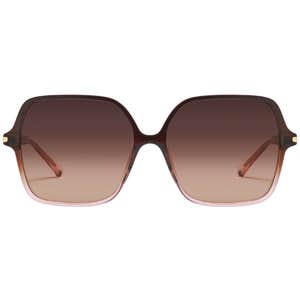
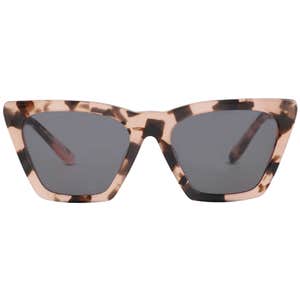
How to Choose Sunglasses for Round Face to Add Definition and Balance
Soft curves, full cheeks, length and width roughly equal—that's a round face. The goal here is to add definition and create an illusion of length through contrast. Angular frames are your best friend.
Best Frames:
- Square and rectangular styles
- Cat eye shapes
- D frames and geometric silhouettes
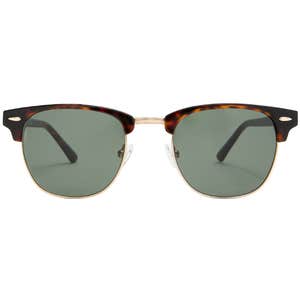
- Angular browline frames
What To Avoid:
- Small round frames that echo your face shape
- Oversized circular styles that exaggerate roundness
- Narrow frames that get lost across wider cheekbones
How to Choose Sunglasses for Oval Face to Enhance Natural Harmony
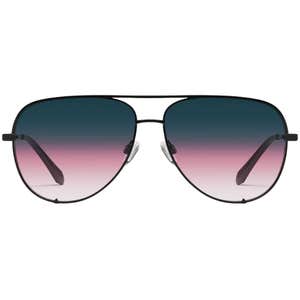
Next up is the oval face shape. If this is your shape, you have balanced proportions, a gently rounded forehead and chin, and are slightly narrower at the jaw than the forehead. Almost every style works for you, but aviator sunglasses face shape compatibility is strongest here. Still wondering what are the best sunglasses for oval faces? The sky is the limit, but these are my top picks.
Best Frames:
- Classic aviators
- Square and rectangular styles
- Round and cat eye frames
- Oversized statement shapes
What To Avoid:
- Dramatically wider frames that disrupt natural balance
- Disproportionately oversized styles
It's all about playing off the natural harmony of your face, so just have fun with it.
How to Choose Sunglasses for Square Face for an Elegant Look
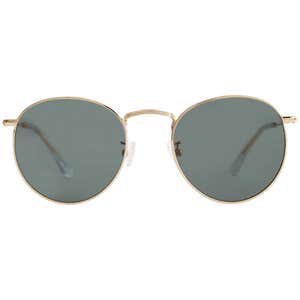
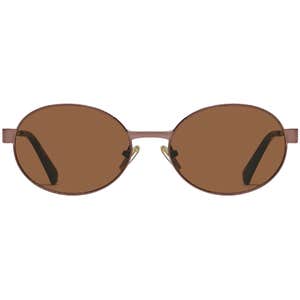
Strong angular jawline, broad forehead, roughly equal length and width? If this sounds familiar you probably have a square face shape. There is something so striking about a square face, but pairing it with boxy frames can feel like a lot. The main goal is to contrast those angles, not compete with them.
Best Frames:
- Round and oval frames
- Classic aviator styles
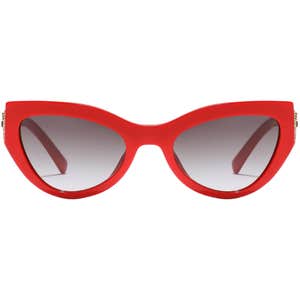
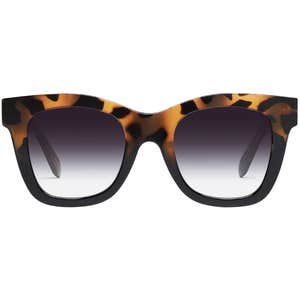
- Cat eye shapes
What To Avoid:
- Sharp geometric or very square frames
- Rectangular silhouettes that emphasize angularity
- Hard corners that double down on existing angles
How to Choose Sunglasses for Heart Shaped Face to Balance Proportions
If you’re not sure if you have a heart face shape or not, this is what to look for: slightly wider forehead and high cheekbones that taper to a narrow pointed chin.
With this shape, the styling strategy is all about drawing visual attention downward to balance a prominent upper half.
Best Frames:
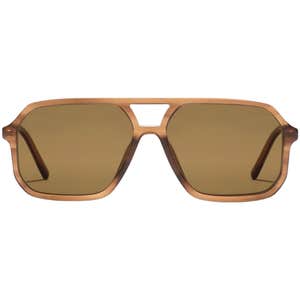
- Frames wider at the bottom
- Cat eye styles with emphasis on the lower rim
- Round or aviator frames with a lighter top bar
- Light colored or rimless styles across the top
What To Avoid:
- Top heavy frames or heavy embellishments at the brow line
- Bold top detailing that draws the eye upward
How to Choose Sunglasses for Diamond Shaped Face to Highlight Natural Symmetry
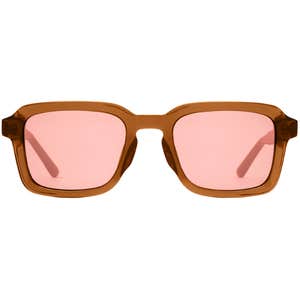
This face shape is similar to oval, but with some slight differences. You may notice that your forehead and jaw are noticeably narrower than the middle of your face, with the widest point right at the cheekbones. Your cheekbones are naturally in the spotlight, so the best sunglasses frames for a diamond face shape are ones with some curves that draw subtle attention upward to your eyes. Have this face shape? You are a rare beauty.
Best Frames:
- Oval and rimless styles
- Cat eye or browline frames with decorative top detail
- Styles with gentle curves along the brow
What To Avoid:
- Very narrow frames that make cheekbones look even more pronounced
- Sharply boxy rectangles
- Styles that add visual width to the middle of the face
This question comes up every so often. What should I avoid when choosing sunglasses for my face shape? I would say that the same universal rule applies across every shape. Look for frames that contrast, not mirror your face shape to create a balanced look. That being said, if you have a square face shape and love a particular pair of rectangular shapes? Go for it. Choosing according to your face shape is all about creating harmony, but choosing what you love or a style that emphasizes your unique features is always an option, too.
Shopping Tips That Ensure Fit, Function, and Fashion
Now that you know which frame complements your face, here are some buying tips that are worth considering before making the final choice.
Fit:
Make sure that the frame is not slipping down your nose or pinching behind your ears. A quick test: smile. If it touches your cheeks, then that's a no. Also, be sure to check temple arm length, nose pad comfort, and hinge quality. I used to ignore those, and one uncomfortable day later, I never skipped them again.
Function:
Always check for 100% UV protection regardless of how cute the frames are (more on this in a second.) Give a thought to your lifestyle, too. Drive a lot? Stay outdoors? Your activities basically reflect your lens choice.
Fashion:
Try on more than you think you need to. Seriously, your instincts might surprise you. Think about your wardrobe, the occasions you will wear them for, and your personal aesthetic.
How to Tell If Sunglasses Have UV Protection Before You Buy
Understanding the importance of UV protection in sunglasses year round is something I feel really strongly about. It needs to get more attention. Before buying any pair, always look for one of these on the label:
- UV400
- 100% UV protection
- Blocks 100% UVA/UVB
Myth worth busting: Darker lenses do not mean better UV protection. Lens darkness and UV filtering are two completely different things. A very dark lens with no UV rating is actually more harmful than a lighter one with proper protection because your pupils dilate behind dark lenses letting in more harmful rays. Kind of scary when you think about it.
I get this question often, “are expensive sunglasses worth it for UV protection?” I would say that price really has nothing to do with it. A $20 pair can protect your eyes the same way a $300 pair can. Just make sure that the UV rating is clearly labeled. If you are unsure about a pair you already own, visit an optician or optometrist and let them test it for you.
Polarized vs Non-Polarized Sunglasses: Key Differences and When To Choose Each
Are polarized sunglasses better than non-polarized? Let me break it down.
Polarized lenses have a special filter that blocks intense reflected light from surfaces like water, snow, and roads. That blinding shimmer off a wet road you see on a sunny morning? These lenses eliminate it, providing you with clearer vision, less eye strain, and better contrast. For driving or outdoor sports like fishing or skiing, polarized is the way to go.
Of course, everything has its downside, too. Polarized lenses can make screens look distorted. Worth knowing if you are constantly on your phone outside.
Non-polarized lenses reduce overall light intensity but do not block glare. They also photograph well, so for outdoor events where you know selfies are basically required (think, music festivals or even a graduation party picnic), these might make more sense. Fine for casual, everyday wear and generally a little easier on the wallet.
So which one wins? Better depends on your needs. Polarized is worth the upgrade if you are often outdoors or behind the wheel. Non-polarized is a completely valid and affordable choice for everyday use, especially when mobile devices are involved.
Guide to Buying Sunglasses with Lens Color in Mind
Usually, people spend so much time on frame style that lens color becomes an afterthought. However, it really should not be. Lens color changes how clearly you see in different conditions. Here is your personal sunglasses lens color guide:
- Brown and Amber: Boosts contrast in changing light
- Gray: True to life color with zero distortion. Actually, one of the best sunglass lens types for driving.
- Green: Reduces glare while keeping colors natural and balanced.
- Yellow and Orange: Built for low light and overcast days, not your bright sunny afternoon lens.
Color isn’t the only thing to keep in mind, lenses can also have some bonus features that help them work harder. Below are some lens types that you should know:
- Mirrored: Reflective coating that cuts glare and honestly looks really cool. These are often confused with polarized lenses, but the technology works differently.
- Gradient: Darker at the top, lighter at the bottom. Great for driving as they block overhead sun while keeping the road clear.
- Photochromic: Adjusts tint automatically with UV exposure. Smart if you move between environments a lot.
Finding Your Flattering Frame: The Confident Choice
By now, I hope you not only have a better understanding of how to use your individual face shape as the foundation for choosing sunnies, but also that lens technology and UV protection are just as important.
The best sunglasses are the ones that make you feel confident, complement your beautiful features, and actually protect your eyes. Take this as your cue to invest in quality UV protection.
Try different styles and never compromise on comfort. A pair you fidget with all day is not worth it, no matter how good it looks. Trust yourself, and with a little help from us, you can find your perfect pair.
Ready to shop for your next set of shades? Check out our list of top sunglasses on Amazon, and don’t forget to look for a coupon to our favorite accessory shops like QUAY and Dolce & Gabbana.
Authors
Brittany Brainard is an editor and writer at Rank and Style who brings a sharp eye, a science brain, and a love for stylish content to the table. With degrees from Misericordia University and SUNY Broome, she blends her background in health science a

.png?width=172)



.png)