Lymphatic Face Brush 101: Benefits, Technique, and What to Buy
I Tried an Esthetician’s Real Technique for Depuffing, Brightening, and Relaxing Your Face
bachca
I've been a Gua sha person for years, so when lymphatic face brushes started showing up all over my social feeds, my interest was definitely piqued. I already knew what the light, directional touch of a lymphatic face massage could do for puffiness and sculpting, but a brush felt like a different enough tool that I wanted to really understand it properly before adding it to my routine, or see if it would replace my gua sha tool completely. So I went to an expert. Alyssa Venezio, Lead Esthetician at Printemps NY, walked me through what's really happening under the skin, how to use a lymphatic face brush the right way, and what to look for in a great face brush before you buy one.
She also let me in on her own personal go-to brush, the Bachca® Paris Lymphatic Drainage Face Brush, so of course I had to try it out and see how the technique plays out in real life. Spoiler: Move over Gua sha, this may be my new favorite self-care ritual.
All products and deals are sourced by the Rank & Style team using data and expert insights. If you shop through our links, we may earn a commission—at no extra cost to you.
Authors

Brittany Brainard is an editor and writer at Rank and Style who brings a sharp eye, a science brain, and a love for stylish content to the table. With degrees from Misericordia University and SUNY Broome, she blends her background in health science a
Written By:
Brittany Brainard


What Is Lymphatic Face Brushing?
Lymphatic face brushing is essentially another form of lymphatic drainage massage, meaning it uses very light strokes to move lymph fluid just under the skin back into circulation. This isn’t a muscle-deep type of movement, instead the strokes are feather-light with just enough pressure applied to the skin, not reaching the muscles or tissues beneath.
That surface level approach is the whole point. As Venezio explained it to me, "the lymphatic vessels sit very close to the surface of the skin, which is why the pressure should always be very light." The goal isn't to knead or “work” the skin. It's to help the fluid that's sitting there move through the vessels.
The other important detail to keep in mind with any kind of face lymphatic drainage technique is the direction of the strokes. “Gentle, directional strokes may help encourage the natural movement of lymph fluid toward the lymph nodes,” she notes.
The Benefits of Lymphatic Face Brushing
Lymphatic face brushing, for me, started out as a morning depuffing routine, but the other benefits are pretty appealing, too. Getting that fluid moving can temporarily reduce puffiness around eyes and jawline, and the soft strokes also stimulate blood flow, giving you an immediate, fresh-faced glow. With regular face brushing, there’s even some evidence for bonus secondary effects, like clearer skin, since your lymphatic system is how your body helps remove inflammation and toxins that can impact skin health.
A benefit I didn’t see coming, but may actually be my favorite now, is that face brushing can help you relax tight, tense facial muscles. "We hold a lot of tension in the face, particularly around the jaw, forehead, and temples," Venezio told me, "so the brushing can feel very calming and leave the facial muscles looking more relaxed." Keep in mind, the pressure of the brush isn’t going muscle-kneading deep, but the soothing, caress-like feeling is what helps those facial muscles unwind.
This isn’t a tool that’s going to permanently change your face shape, but the temporary boost in glow and definition are more than enough reasons for me to keep one on my vanity.
What to Look for in a Lymphatic Face Brush
Brittany Brainard
Not every brush marketed for lymphatic drainage is the right choice for your face. If you tried one and it felt scratchy or awkward to handle, don’t count out lymphatic brushes for your face yet, you just need to know what to look for in a good one.
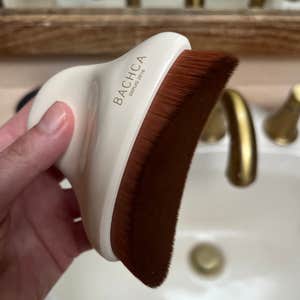
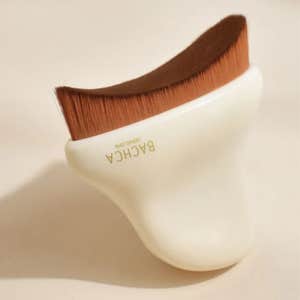
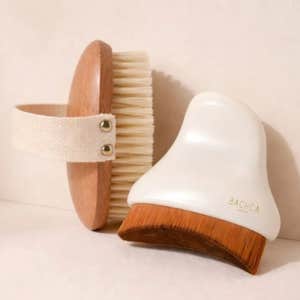
According to Venezio, the bristles are the first thing to check. "They should feel extremely soft and flexible, with no scratching or dragging," she told me. "A lymphatic brush is meant to gently stimulate the skin, not exfoliate or scrub it." That means body dry brushing tools can be ruled out when it comes to your face; those bristles are usually far too stiff. To keep contact light and even over the curves of your face, a brush with densely packed, contoured bristles is the way to go. A paddle-shaped brush might work, but isn’t going to give you the same experience as one with a curved design.
The handle also matters more than I anticipated. You want something lightweight and easy grip, especially when maneuvering around delicate areas like the eyes. When I asked Venezio what she personally reaches for, she pointed to the Bachca Lymphatic Drainage Face Brush. "The bristles are very soft and the handle makes it easy to keep the movements light and controlled," she said. "It feels like a skincare tool rather than a cleansing brush."
Her advice on what to avoid: be wary of any brush that feels rough, requires applying pressure to work, or promises over-hyped lifting or permanent results. "A good tool supports a gentle routine," she said, "It should not rely on exaggerated claims." If you're shopping around for the best lymphatic face brush for your routine, that's the litmus test I'd use to sort through the options for one that can do the job right.
Lymphatic Face Brush vs. Gua Sha: What's the Difference?
I like my Gua sha tool but I’m not married to it, so I had to know: which is better, a lymphatic face brush or a Gua sha tool? Are they doing the same thing? As it turns out, while that main goal of moving lymph fluid (and all the benefits that come with it) remains the same, the experience and technique are pretty different for each.
If you’ve never tried Gua sha, let me give you a quick rundown of the technique: it involves using a Gua sha tool, usually gently curved and made of jade or stainless steel, to glide over your face with the help of a facial oil to keep things slippery. The angle at which you hold the tool matters as well as the pressure, and it can take a little practice to get the hang of it (I personally have to remind myself to ease up on the pressure). Lymphatic face brushing on the other hand, doesn’t require any oil and the motion and pressure are much more straightforward (and harder to overdo). I would say that if you’re just starting a lymphatic facial routine, a contoured face brush is a much more forgiving method to start with.
Venezio put it simply: "I tend to recommend brushing to people who want a softer, more intuitive approach. There is less pressure involved, and it is easy to incorporate into a morning routine without needing a lot of technique." For me, the brush makes more sense for my everyday morning routine, since I can do a quick session that doesn’t leave me washing excess oil off my face afterward, but I do still use my Gua sha on occasion when I have more time for deeper sculpting along my jawline.
How To Use a Lymphatic Face Brush Like an Esthetician
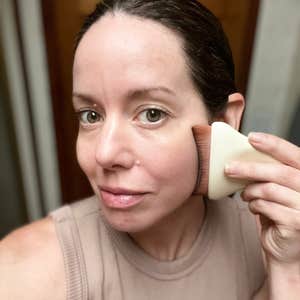
Brittany Brainard
Once I got my hands on the right brush, I was pleasantly surprised with how easy it is to use. While it’s hard to get it wrong, I wanted to be sure I was getting the best experience from the start. Always start with a clean, dry face and a clean, dry brush, and then follow the steps Venezio outlined below on how to use a lymphatic face brush correctly.
Step 1: Prepare the area you’ll be moving the fluid to
Begin at the base of your neck, using gentle downward strokes toward your collarbone. This gets things moving in the area you will be pushing fluid to, so it has a place to go.
Step 2: Start brushing your face from the center outward
- Brush from the center of your chin outward along your jaw toward your ears
- Sweep from the side of your nose across your cheek toward your ears
- Using the lightest amount of pressure, glide lightly under your eye outward toward your temple
- Moving above your eye, start at the center of your forehead and brush across toward your temple
- Complete the sequence by brushing down the side of your face and neck all the way down to your collarbone (where you started in the first step)
Each of these movements should be repeated roughly three to five times, on each side of your face. The motions should be smooth and slow; with gentle pressure and no pulling skin. If you feel like your skin is being pulled or stretched, lighten up on the pressure.
Editor's Take: I Tried the Bachca Lymphatic Drainage Brush
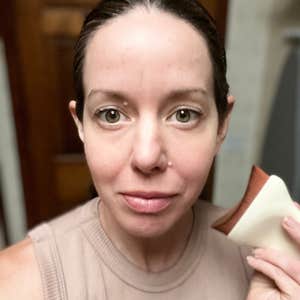
Brittany Brainard
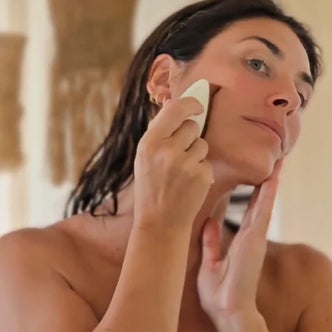
Senior Editor, Brittany Brainard, after using the brush to the right side of her face only.
Reading about a technique is one thing, but I wanted to actually live with this brush before recommending it to you. I picked up Venezio’s top choice, the Bachca Lymphatic Drainage Face Brush, and used it most days for about two weeks, following her brushing sequence above rather than winging it the way I normally would.
The brush itself is everything that she described in a great lymphatic face brush—the bristles are soft, thick, and velvety, with an ergonomically shaped handle that I found made it easy to angle the brush in pretty much every direction with only one hand needed. This proved especially handy for the under-eye area and along my jawline, and after I went through the sequence one time, it was easy to keep the flow going after.
While you can really make this part of either your morning or nighttime routine, I felt like I got the most benefit in the morning since I tend to wake up a little puffy. Venezio mentioned that the whole routine can be completed in roughly five to ten minutes, if really taking your time, and that felt pretty accurate to me; most mornings I finished up in just over five.
Does Lymphatic Face Brushing Work?
Yes! I could definitely see a difference, even on day one, in overall radiance and a slightly lifted appearance following my morning routine, but the result will look different for everyone and really depend on using a good brush and following a routine that directs the fluid away from your face. The effects are subtle, but just enough to make me look brighter and more awake, and if I’m being honest, my face feels more awake, like the act of brushing my face energized my skin for the day.
Aftercare and Cleaning Your Brush
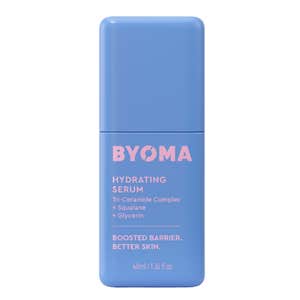
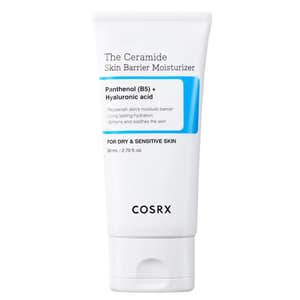
After I finish up brushing, I keep going with the rest of my skincare routine, which in my case means serum, SPF, and makeup for the day. Venezio recommends following up with a hydrating serum and moisturizer to keep the skin comfortable and support the skin barrier, which works for both a day and night face brushing routine. If your skin feels sensitive after, I would forgo retinol or other ingredients that can increase irritation.
The brush itself needs a little upkeep, too, especially if you're using it consistently throughout the week like I am. "Use a small amount of gentle cleanser or brush soap on the bristles, rinse thoroughly, and avoid soaking the entire brush or wooden handle," Venezio advised. I used a microfiber towel to blot away excess water and then let it dry completely on my vanity before using again. Another tip Venezio shared is to not share your brush, emphasizing that “good hygiene is especially important with any tool that is used repeatedly on the face.”
Should Anyone Avoid Lymphatic Face Brushing?
As gentle as this technique is, it isn't right for every situation. Venezio was clear that you shouldn't use a lymphatic brush over active or inflamed acne, irritated skin, open cuts, sunburn, rashes, or infections, or on any area that feels painful or unusually sensitive. If you're dealing with unexplained facial swelling, or you have a medical condition involving your lymphatic system or circulation, that's a conversation for a healthcare professional before you try this at home.
It's also good to know the warning signs that you're pressing too hard. Persistent redness, burning, stinging, tenderness, or increased sensitivity after brushing all mean you should ease up. "The skin should never feel scraped, sore, or stretched," Venezio said. This is meant to be a light, gliding motion over the skin, and the moment it stops feeling gentle is the moment to stop.
The Bottom Line on Lymphatic Face Brushing
After two weeks of getting hands-on with the tool, along with Venezio's tips and notes, my takeaway is that lymphatic face brushing is earning its hype for what it actually is: a low-effort, feel-good addition to any beauty routine. The technique is easy to pick up on the first try, doesn’t require additional products, only takes a few minutes, and just feels good; the brighter, less puffy aftereffects are just the icing on the cake.
Authors
Brittany Brainard is an editor and writer at Rank and Style who brings a sharp eye, a science brain, and a love for stylish content to the table. With degrees from Misericordia University and SUNY Broome, she blends her background in health science a

.png?width=172)






.png)