Makeup for Every Skill Level
How to Build Your Makeup Technique From Basics to Beyond, According to Experts
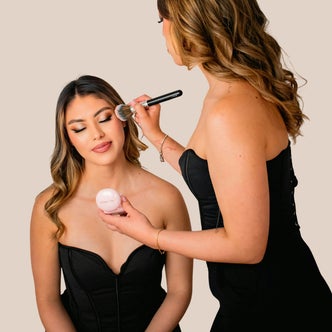
DANFER AZA yamit via Pexels
There's nothing like putting on a full face of makeup to help boost my confidence level and self-esteem. Now, I'm not a professional makeup artist, but as a beauty editor and writer, I've come to learn some of the importance of technique when it comes to makeup application. You can have the best products on the market, but without the proper technique, you won't get the desired result and look you want in most cases. Take it from me, you don't need to go to cosmetology school to nail the proper technique, but it does require a little bit of time, effort, practice and patience if you want to learn how to get better at makeup.
"Ultimately, technique is the difference between makeup looking painted onto the face and something wearable that truly enhances the face," says Lindsey Trop, a Connecticut based celebrity makeup artist.
If you're reading this, then you're probably interested in learning more about how to improve your technique whether you've just started dabbling in makeup or have been wearing it for years. Luckily, we tapped a few makeup artists about everything from the importance of having a strong foundation to where most people get stuck in the process.
(Image courtesy of DANFER AZA yamit via Pexels)
Why technique matters more than product at every level
It's not about who does it, but how it's done.
Makeup technique is about being intentional with the tools you use, how you layer and blend them, where you place them, and how much you apply—so that the makeup enhances your natural beauty instead of masking it.
Both a professional makeup artist and a typical makeup user could use the same foundation and have it look vastly different based solely on the technique used.
"Proper technique takes multiple factors into account, including skin texture, eye shape, climate, and even where the client is going, to ensure a result where everything works together in harmony. Without that, makeup can look artificial or out of balance," says Trop.
What advanced technique actually means outside of a tutorial
It's not as complicated as you might think.
You might be wondering what the biggest difference is between a professional makeup artist and an everyday makeup user. Well, aside from cosmetology school (unless they're self-taught,) it's the advanced technique used during the process.
"Advanced technique involves more refinement—better blending, more intentional placement, and a deeper understanding of how products interact," says Trop. "As you become more advanced, you develop a stronger sense of proportion, facial structure, and color theory and it becomes less about simply applying products and more about shaping, enhancing, and creating balance."
Additionally, New York City-based makeup artist Lauren Wolborsky says a big difference comes down to confidence and a willingness to try new approaches. "As you practice and refine your skills, you become more comfortable adjusting techniques to suit your face," she says.
What a strong foundation actually looks like—and why it's worth getting right before anything else
It's hard to progress with makeup without nailing a solid foundation.
Your makeup will really only look as good as your foundation—think of your foundation and skin as your canvas. Everything else you apply builds on top of that whether that's blush, eye makeup, or contour.
"A good foundation should look like your skin—balanced, blended, and not heavy," says Wolborsky. "Choosing the right formula for your skin type, whether dry, oily, or textured, makes a big difference." After finding the right foundation, you'll want to make sure your skincare routine is done and your skin is ready for application. This is a step that often goes overlooked as many people want to rush straight into applying the product, however, it's equally, if not more, important.
As for the actual foundation itself, Trop says one of the biggest mistakes that can be made when it comes to foundation is over-blending or overworking it into the skin.
"When you rub too much, you can actually move the product around instead of letting it sit evenly on the skin," Trop explains. "A better approach is to press or tap foundation into areas where you need more coverage, and use lighter, sweeping motions where you need less. Also, most people don’t need a full layer everywhere—focusing coverage only where needed creates a much more natural, skin-like finish."
Here are some other tips for helping create a strong foundation:
- Use a wet Beautyblender to help reduce cakiness during application.
- Set the foundation with a translucent powder to lock it into the skin.
- If using a makeup brush, move it in circular motions instead of swiping across the face.
- Apply foundation to your ears to allow them to blend in with the rest of your face.
You'll know your foundation technique is improving when your skin looks more even, blended and natural. Instead of having streaks and areas of discoloration, it will sit on your face like a second skin. This isn't something that happens overnight, but actually takes time to find the right shades and products that work for you. If you notice one foundation is too mattifying for your already dry skin, then you'll want to consider pivoting to one that's more dewy and vice versa.
The skills that make the biggest visible difference, in order
These five skills can take your makeup routine to the next level
There are several makeup techniques for beginners that you can practice to help improve your skills. Spoiler alert: Some of them don't even have to do with the makeup itself.
Understanding your facial features
Your facial features have more of an impact on your makeup than you might think. It's important to understand what your specific facial features are, including what your face shape is, whether it's round, heart-shaped, square, triangle, etc and the eye shape you have (almond, wide, monolid, hooded, etc.)
For example, the way to contour a heart-shaped face is slightly different than the way you'd add depth to a triangular face. The same goes for eyeshadow since someone with hooded eyes would benefit from applying eyeshadow above the natural crease compared to someone with deep set eyes who can apply pigment directly to the lid since there's more surface area to work with.
Prepping your skin
Skin prep is arguably the most important step of any makeup routine. "If you have visible pores or oiliness, a blurring or mattifying primer can help before going in with a foundation," says Lindsey Trop. This doesn't have to be an expensive primer either—if you're just starting, then the drugstore can help create a strong base."
It's important to keep in mind that everyone's skin is different and natural skin has texture. Just because you see smooth, flawless complexions on Instagram that doesn't mean that's actually how the makeup looks in real life. There are ways to make your makeup look more smooth, however, products don't just magically erase natural texture although they can help minimize the appearance.
Not going overboard with concealer
Many people, especially beginners, think more is better when it comes to concealer. That's actually not the case and it can actually highlight blemishes and texture more than if you used less or none at all.
A swipe across the desired areas such as the undereye area or the chin can help cover dark circles or redness. There's no need to pile it on as it can settle in the delicate creases and look more visible and cakey. This is particularly important in the eye area as the skin is so thin and sensitive.
More advanced makeup artists will also know that concealer can also be used to brighten certain areas on the face. This is typically done with a lighter shade concealer and in some triangle shapes under the eyes.
Pro tip: Setting concealer with a translucent setting powder to lock it in can help prevent it from creasing throughout the day.
Moving around the face
Aside from the foundation and concealer, you don't really need to complete your makeup look in a specific order. In fact, Trop says that like a sculpture, she recommends building the face in stages, revisiting different areas to refine and balance the overall look as you go. "Blending, placement, and building in light layers will always have more impact than following steps rigidly," she explains.
With that said, you can jump from the foundation to the lipstick and lip liner and then back to the eyeshadow and eyeliner. There are really no rules when it comes to the flow of the process. If you prefer to work on one area at a time, then that is completely up to you, but it won't necessarily impact the look.
Where most people get stuck
It can be easy to get discouraged when your makeup isn't looking the way you're hoping it would or you're just comfortable doing what you're used to. That said, there are a few places where most people get stuck with makeup skill progression and when building makeup technique.
Going too fast
It's easy to find the time to do almost anything these days and makeup is often a quick process for many people in the morning. That said, going too fast won't help you achieve the results and look you want.
"I personally feel like people aren’t applying enough makeup," says Valeria Nichols, a makeup artist from Mexico City. "When they do, they do it a lot and fast when makeup needs layering and intention to get the best results."
Even if you don't have time before work, take some time on the weekend or on a day off practice intentional makeup whether that's slowing down with the application or spending time to blend out the eyeshadow so there's no hard lines.
Not changing it up
You might be used to doing your makeup the same way each morning, however, it's not going to change unless you switch it up.
"Many people either stick to the same routine for years without adjusting for changes in their skin, or they try to copy looks that don’t suit their features," says Wolborsky. "Makeup should evolve with you."
For example, if you don't like how your eyeliner looks or you want to achieve a sharp cat eye, then that would be possible if you're using the same eyeliner crayon from your teenage years.
Not using the right tools
Tools make the process easier in a lot of cases, especially when it comes to the face and eyes. This is truly one of the makeup basics that makes a difference especially for beginners.
Speaking of tools, some people simply use their fingers to apply eyeshadow and concealer and although in some cases that can be beneficial, you'll want to have at least a makeup sponge, some brushes, and an eyebrow spoolie on standby.
Having these beauty tools makes the process easier and can accentuate certain features—for example, an eyelash curler will help elongate your lashes in a way that most mascaras cannot on their own.
Here is a list of tools you want to have in your makeup bag:
- A beauty sponge
- Makeup brushes
- Eyelash curler
- Eyebrow spoolie
- A brush cleaner
How to practice in a way that builds real skill
If you're looking to practice and improve your makeup skills, it takes some time and reflection on what is working and what's not.
Here are some ways to see makeup skill progression:
- Try changing one thing at a time—like blush placement or eyeliner style—and see what works for you. "Taking inspiration from others can be helpful, but the goal is to adapt those ideas to suit your own features," says Wolborsky.
- Take photos—According to Trop, taking pictures in natural light allows you to see how your makeup actually looks—whether the colors are balanced, the blending is seamless, and the placement is working in a way that you can't see with a mirror a lot of the time.
- Try different products—In some cases, it might be the product you're using. Practice with different products whether it's a different shade of concealer or a smaller or larger beauty sponge for application.
- Switch up your motions—Instead of moving quickly to cover the largest amount of surface area in the shortest time, you should slow down and be cognizant of your motions. For example, with foundation, you want to press or tap it into areas where you need more coverage, and use lighter, sweeping motions where you need less, according to Trop.
At the end of the day, makeup technique is something that is developed over time and with practice. Don't expect to achieve professional-grade results if you haven't put in the time and effort to do so. Also, remember, makeup is supposed to be fun and make you feel your best so remember that next time you stand in front of the mirror.
All products and deals are sourced by the Rank & Style team using data and expert insights. If you shop through our links, we may earn a commission—at no extra cost to you.
Authors

Casey Clark is a freelance journalist and content creator from New York City who specializes in beauty, fashion and commerce. She holds a bachelor's degree from Hofstra University in journalism and her byline appears in major national publications in
Written By:
Casey Clark


Ready to shop for tools and products to help level up your makeup technique? Don’t miss out on the best deals at Ulta Beauty, Sephora, and your other favorite retailers by keeping an eye on our current promotions.
Authors
Casey Clark is a freelance journalist and content creator from New York City who specializes in beauty, fashion and commerce. She holds a bachelor's degree from Hofstra University in journalism and her byline appears in major national publications in







.png)